Activity 1
Gain Some Primary Insights
▼
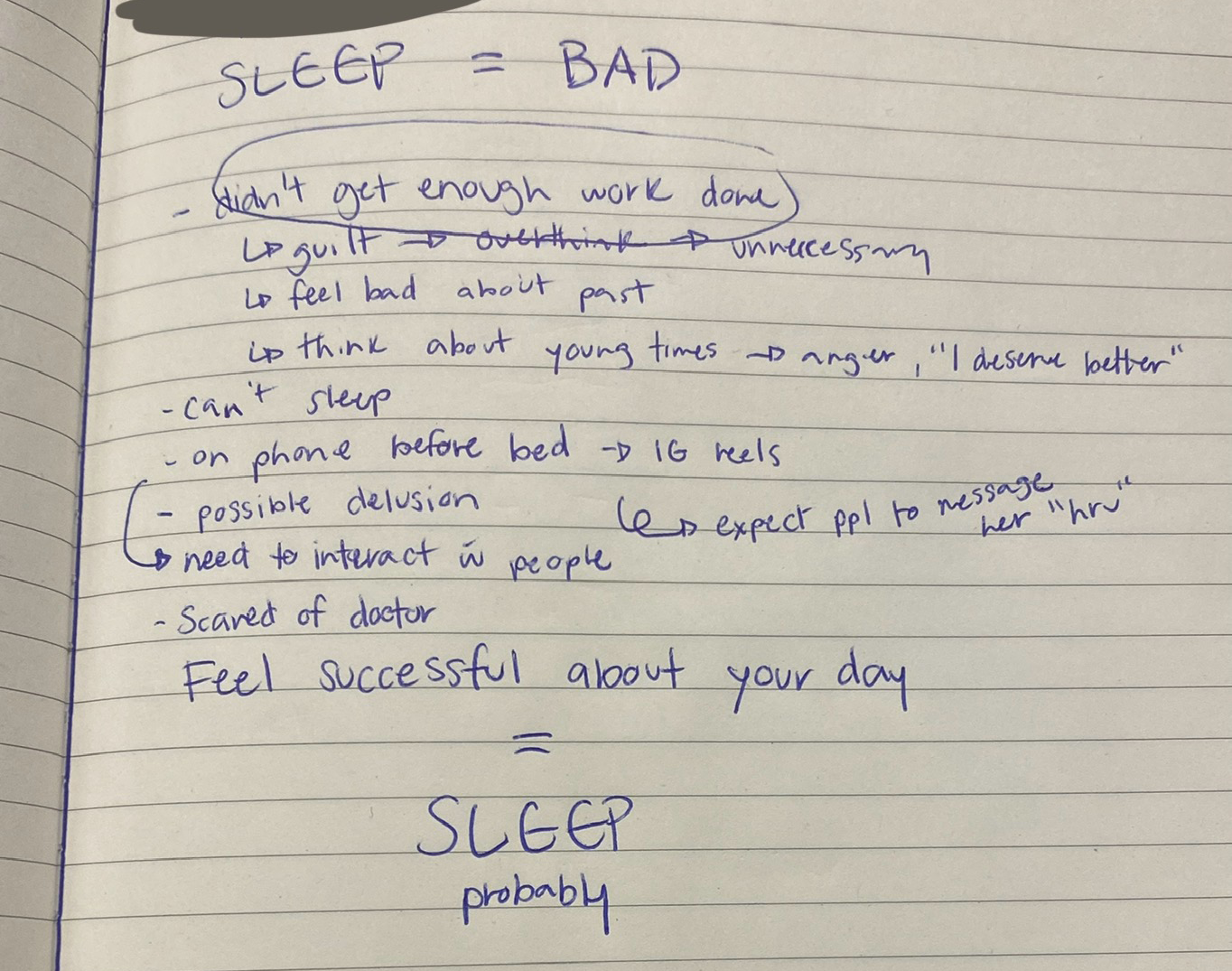
The goal of the first activity was to help us gain a deeper understanding of a problem by conducting primary research. For this activity, students were asked to conduct a semi-structured interview on a classmate. Our interviews were to be based off of a prior activity, in which we drew out a chart showing the highs and lows of our days. The interviews were conducted regarding the low points of the interviewee’s day.
During the interview, we were to write down all of the main insights that we can gather, and combine the insights to find any common themes.
We then highlighted/circled any important or insightful findings, and selected the top 3 insights that were found.
The interviewee did not feel content with their day
They were on their phone before going to bed
They began overthinking before going to bed
The interviewee struggled to have a good night’s sleep, as they did not feel content with their day, and engaged in habits that contributed to their restlessness. Before going to bed, they spent time on their phone, which likely stimulated their mind rather than helping them unwind. As they lay in bed, they began overthinking, making it even more difficult to relax and fall asleep.
After asking more questions, I realized that their struggle was not just about using their phone or overthinking, but rather a result of an underlying feeling of dissatisfaction. The main reason they were unable to sleep well was that they did not feel a sense of accomplishment or success in their daily activities. This lack of fulfillment created a lingering sense of stress, which then led to overthinking and, ultimately, disrupted their ability to fall asleep peacefully.
This realization gave me a much deeper perspective on the problem, as I initially assumed their sleeplessness was due to more surface-level factors, such as phone usage or an overactive mind. However, upon further interviewing them, I found that the true issue likely stemmed from their perception of productivity and success throughout the day, which played a significant role in their overall well-being and nighttime routine.